
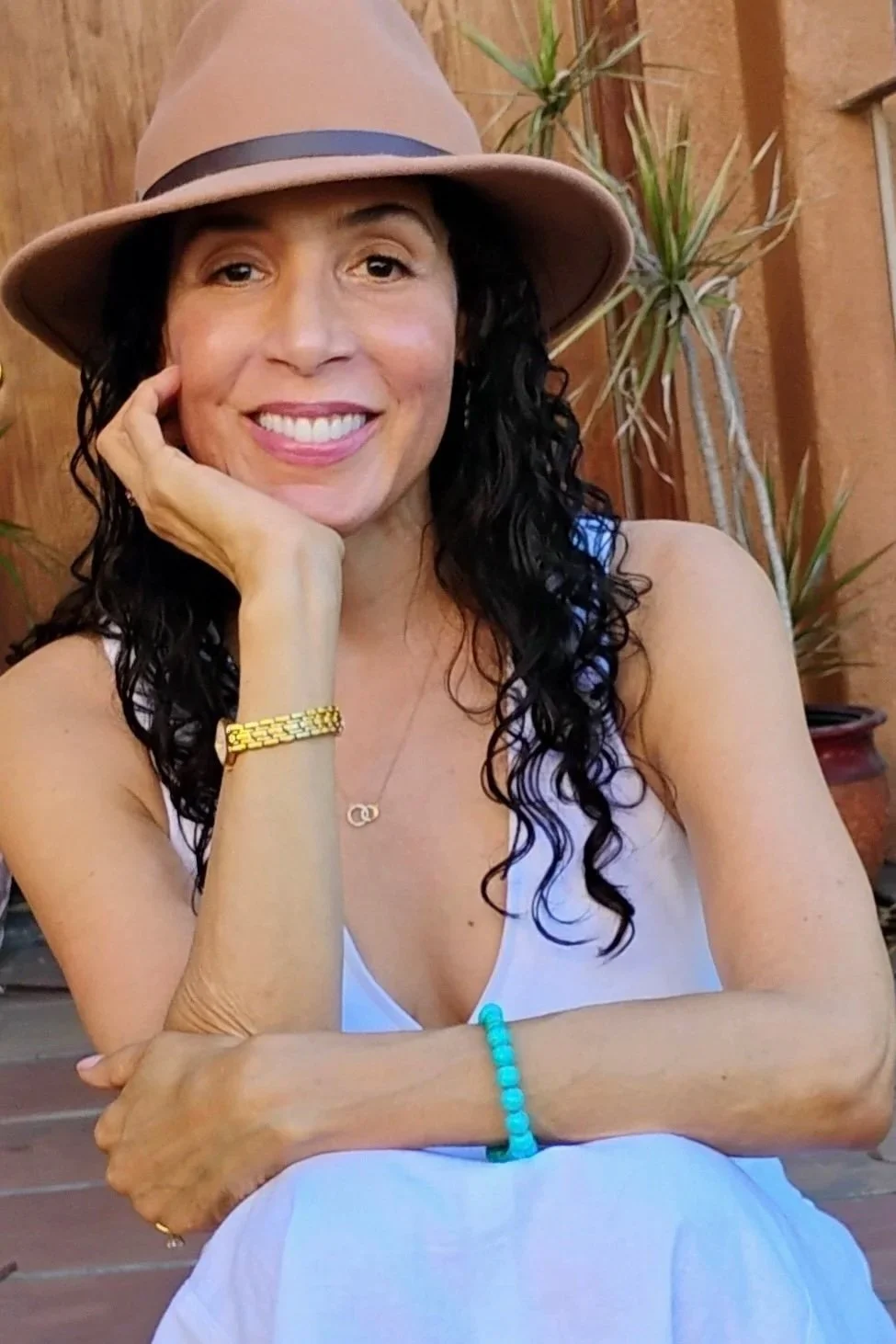
Toni Ann Johnson
Toni Ann Johnson won the Flannery O’Connor Award for her short story collection, Light Skin Gone to Waste, which was selected for the prize and edited by Roxane Gay. The book was a finalist for the NAACP Image Award for Outstanding Literary Work and a finalist for the Saroyan Prize. A novella, Homegoing, is linked to the story collection and was released in 2021 after winning Accents Publishing’s inaugural novella contest. Her forthcoming collection, But Where’s Home?, is linked to the previous two books and was selected as the winner of the Screen Door Press Fiction Prize by Crystal Wilkinson, who also edited. Johnson has been a fellow with Callaloo, The Hurston/Wright Foundation, and Kimbilio. She’s based in Los Angeles.
Featured Work

BUt Where’s home?
Deeply emotional, funny, and unflinchingly honest, But Where’s Home? lays bare the realities of Black life in America, challenging readers to confront issues of racism and classism as well as narcissistic abuse and parent-child relationships.
The Arringtons are an affluent Black family residing in a picturesque, predominantly white town. Through multiple perspectives that span from the 1960s to 2022, readers are invited into the sometimes painful and often humorous lives of the Arringtons. The daughters, Livia and Maddie, must find ways to survive their narcissistic parents. Their father, a practicing psychologist, has affairs with white women in the town. Their mother is volatile, dealing with infidelity while trying to raise daughters in a place that rejects them. The complex and interwoven characters create a kaleidoscope of truths about human nature and the United States’ complicated relationship with race.
Five Questions for TONI ANN JOHNSON
-
But Where’s Home? is about the same characters as in my previous linked collection, Light Skin Gone to Waste. Both are autobiographical fiction and are based on my family in the real (white) town of Monroe, NY, from the 1960s through the 2020s. What most inspired me about my family’s experience was how unresolved traumas led to abusive behaviors that affected each generation. I was also inspired by how the manifestations of racism my family members experienced led to choices that, in some ways, made them tough as they resisted it, and in other ways, made them crazy and led to the perpetuation of unconscious self-hatred.
-
There are two stories in the book: “Far Away from Here” and “Far Away from There,” that were particularly difficult to write. At first, I tried to execute them as one story; the time periods entwined. In Far Away from Here, Maddie is eight years old. In Far Away from There, she’s fifty-eight. It was one of the last stories I completed, and both Crystal Wilkinson (the editor) and I felt it needed more work. Finally, Crystal said to separate them into two separate stories. That helped because it showed me areas that I needed to fill in. But those two stories were challenging because they’re based on experiences that remain painful. Both stories reference the sexual abuse that’s fully executed in the earlier book Light Skin Gone to Waste in the story “Lucky.”
They also reference child abuse and cruelty and the isolation Maddie experiences not only as a the only Black girl among her peers, but also within her own family. I don’t like to write without humor; “fucked up and funny” is typically my default. And there is some humor in these stories. There’s also hope and resilience. But the ideas and events are heavy and sad, and writing based on my own experience is never as fun as writing from the perspective of other characters. “Far Away from There” deals with the choice to go “no contact” with a narcissistic parent. That’s a difficult and devastating choice, but for those dealing with narcissistic abuse, it can be the only choice left because continuing a relationship will destroy one’s mental health. It’s also a choice that people who haven’t experienced narcissistic abuse can’t understand, and so a lot of judgment and criticism can follow.
-
I have a lot of fun promoting books with live events. I love reading my work for an audience. I was a professional actress before becoming a writer, and doing readings is a great opportunity to perform. I also enjoy connecting with friends and family at events. It’s my chance to hug a lot of people I adore but don’t see often. My least favorite part of publishing is how difficult it is to get a book published—all the gatekeeping, hierarchies, and politics. But the difficulty is also what makes it special to be lucky enough to have a book in the world.
-
Percival Everett. I admire his work, of course, but I also admire the way he’s approached his career. He published with small presses and university presses before moving on to Graywolf. More recently, he went to a Big Five. I’ve been reading Everett for over twenty years, and it seems that for many of those years, he wrote exactly what he wanted without worrying about big book deals or writing what was “commercial.” That long process of doing precisely what he wanted allowed him the freedom to be the artist he is, and the artist he chose to be, not the writer the publishing world dictated. But he ended up a big critical and commercial success after he’d created a massive body of work. His belief in his own voice and his patience in allowing the publishing world to catch up to his greatness (instead of chasing the publishing world) is badass.
Deesha Philyaw. I admire Deesha’s writing immensely. The Secret Lives of Church Ladies is spectacular. I also admire her for being one of the most generous literary citizens I’ve known. She’s encouraging and helpful to her colleagues and mentees. She connects people and fosters community. She promotes other writers with her Substack and her podcasts. She’s part of the Kimbilio community, and we’re fortunate to have her.
Ann Petry. I regret that I only discovered Ann Petry a few years ago, when I learned about Red Hen Press’s Ann Petry Award. I read The Street and was enthralled with her writing. There’s a rhythm to it and an urgency that pulls the reader in and doesn’t let go. The book is extraordinary, and the protagonist’s inevitable decline is heartbreaking. It’s also an important examination of the difficulties Black women faced in late 1930s/early 40s New York City.
-
My longtime partner, novelist and TV writer/showrunner, Leonard Chang, was one of my mentors when I was doing my MFA at Antioch University. He was at home with me when I learned that I won the Screen Door Press Prize, which came with an offer to buy But Where’s Home? I was pleased to share the news with him, not only because he’s my partner, and he was happy for me, but also because, as a former student, I was glad to show him evidence that I’m doing the work and getting it out there as he encouraged me and his other mentees.
