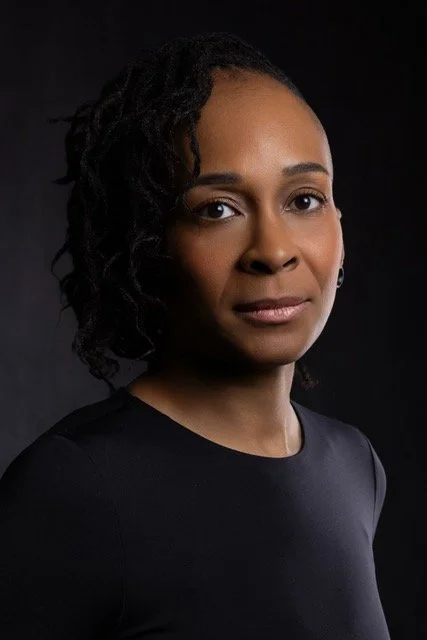
LATOYA WATKINS
LaToya Watkins is an award-winning author of two books. Her short story collection, Holler, Child, was longlisted for the National Book Award and the winner of Reading the West Book Award in Fiction and the Writer’s League of Texas Book Award in Fiction. Her debut novel, Perish, was published to great acclaim in 2022. LaToya’s writing has appeared in A Public Space, The Sun, McSweeney’s, and the Kenyon Review, among other publications.
Featured Work
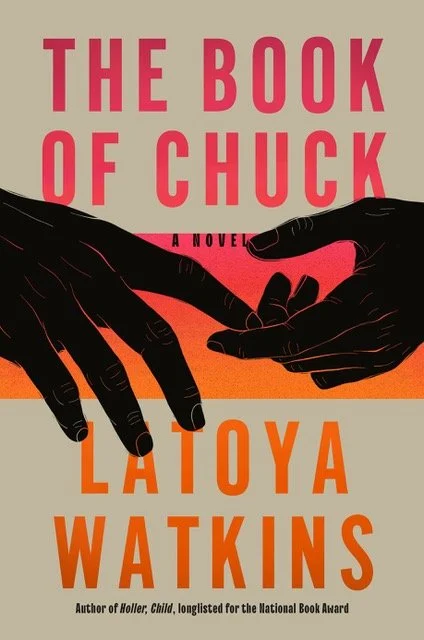
THE BOOK OF CHUCK
When baby Nannie utters these prophetic words in 1936, she marks herself as cursed. The ability to see death before it happens forever changes the course of her life, and the lives of her descendants.
Forty years later, Chuck is about to become a father. He intends to make a home filled with love, unlike the one he was born into. But when he begins paying visits to his estranged mother, Nannie, in search of answers, she starts pushing him away from the life he’s always wanted.
It’s the cusp of a new millennium, and Baby is on the precipice of major change. Her mother is packing up their home and moving them into a religious community that believes the world is ending. But when Baby begins to have surprising visions of death, she investigates her lineage, piecing together what she can about her father, Chuck, and her family’s deeply shrouded past. These visions, once seen as a curse, become an indelible link to her history—recasting what she thought she understood of love, parentage, and prophecy.
Five Questions for LATOYA WATKINS
-
Discernment. I don’t know if I’ve always been this way, but I definitely am now. I've developed a real interest in seeing people clearly, for sensing who they are beneath what they present to the world. I'm less interested in what people say about themselves than in what they choose, their contradictions. And silence. So much is revealed through silence. I think that serves me well as a writer. It helps me see the complexity in people and write characters who feel fully human. I'm always asking what someone wants, what they're hiding, what they're afraid of, and what they're willing to risk.
-
My grandson and my father. The Book of Chuck began with an essay I was writing. It was supposed to be something for my grandson. I set out to write about “home” but found myself writing about an old amusement park. It was the last place I remembered being with my father before he died when I was seven. As I was writing, I reached for other memories of him and realized they were gone. It was kind of devastating. It felt like I had lost him more than once: when he died and then again when time slow ate away all these memories I thought I'd always have. Around that same time, I found myself interested in Einstein's theory of relativity and the idea that time isn't fixed or linear. I wasn't interested in time travel so much as I was interested in the emotional and spiritual possibilities of it. I started asking myself questions. What if the past isn't entirely gone? What if the people we've loved and lost still exist somewhere beyond our understanding? And what if memory is its own kind of time travel? The questions are the spine of The Book of Chuck.
-
Near the end of the novel, there's a death scene that was incredibly difficult to write. It required me to go to emotional places I'd never been before. I had to imagine a kind of grief and terror that completely gutted me. When I finished the first draft of that scene, I was scared in a horror-movie way. I slept with the lights on for days, pulled the covers over my head, and found myself looking over my shoulder for months afterward. I still can't fully explain what I tapped into to write that, but I know it asked something of me I'd never given before.
-
A good day starts quietly. There’s morning prayer, a perfect cup of coffee, and enough unhurried time to ease into the day. There’s no chasing it. Somewhere in there is a long walk, the kind that lets my mind wander and solve problems I didn't know I was thinking about. If it’s perfect, I get to spend part of the day reading something that reminds me why I love books in the first place. And then I sit with my own characters. On my favorite writing days, the outside world is quiet enough that I can hear their voices clearly and follow wherever they lead me. That's a good day.
-
My favorite part is everything that happens before publishing. I love the arrival of an idea, the story as it unfolds, the early drafts, those first rounds of revision where the world belongs only to me. The long, uninterrupted stretches of writing are where I feel most like myself. My least favorite part is letting go. Once a book enters the publishing process, it’s not just mine anymore. There are deadlines, marketing plans, interviews, events, and eventually the moment when the book leaves my hands entirely and becomes everyone else's. I'm grateful for it, but if I could live in the quiet space between the first idea and the final revision, I probably would.